Mastering Wellness: Your 2026 Chronic Illness Reflection Journal
Living with a chronic condition is a full-time job that rarely offers vacation days. It requires a level of administrative energy and emotional resilience that often goes unseen. As we look toward the coming year, the need for a structured, empathetic system to track symptoms, appointments, and emotional shifts becomes paramount. The 2026 Chronic Illness Reflection Journal is designed to fill that void, transforming the chaotic data of daily health into a manageable, visual narrative. It isn’t just a planner; it is a comprehensive tool built for the reality of spoonie life, combining the utility of a medical log with the gentleness of a gratitude journal.
A Design That Heals: Visual Style and Structure
When dealing with health struggles, visual clutter is the enemy. The aesthetic of the 2026 Chronic Illness Reflection Journal prioritizes clarity and calm. The layout is intentionally minimalist, utilizing negative space to prevent the user from feeling overwhelmed. The typography choices within the Canva template lean towards clean sans-serif fonts for headers and highly legible serif fonts for body text, ensuring that readability remains high even during moments of brain fog or fatigue.
The visual personality of this journal is compassionate and organized. It avoids the sterile, cold feel of a clinical hospital form, instead opting for a warm, approachable tone that encourages daily interaction. The color palette is soft, designed to be easy on the eyes, which is a crucial consideration for users who experience light sensitivity—a common symptom in many chronic conditions. This isn't just about looking good; it is about functional design that respects the user's physical limitations.
Anatomy of the 28-Page System
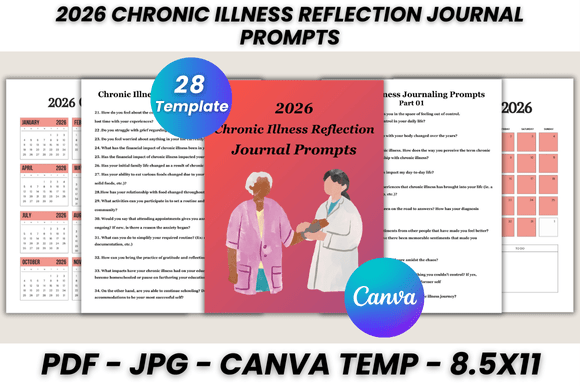
The true power of this template lies in its logical flow. It is a 28-page printable PDF (US Letter size, though easily resizable in Canva) that guides the user through the entire year. It functions as a digital design asset that bridges the gap between medical necessity and personal reflection.
The structure includes:
- Identity and Ownership: A dedicated "Belongs To" page creates a sense of ownership and importance.
- Macro and Micro Planning: A full 2026 Calendar allows for a bird's-eye view of the year, while the 2026 Monthly Planner breaks down January through December for detailed scheduling.
- Deep Reflection: The core of the journal features Chronic Illness Reflection Journal Prompts across four pages. These prompts are designed to trigger introspection, helping users identify patterns in their health that they might otherwise miss.
- Space to Process: Four dedicated Answer Pages provide ample room for writing, ensuring the user isn't cramped by restrictive text boxes.
- Utility: "Important Notes" and "Notes" sections offer flexibility for medication changes, doctor's instructions, or spontaneous thoughts.
Leveraging Canva for Customization
One of the standout features of this product is its delivery as an editable Canva template. For the designers, entrepreneurs, and content creators in the chronic illness community, this offers an unparalleled level of control. You aren't just buying a static PDF; you are acquiring a versatile design asset.
Using a free Canva account, users can modify every aspect of the journal to fit their specific brand identity or personal aesthetic. If the default sans-serif font doesn't resonate with you, swap it for a handwritten script font that feels more personal. If the color palette triggers migraines, you can instantly adjust the hex codes to something darker or more muted. This level of customization ensures that the tool serves the user, not the other way around.
Practical Applications for Creatives and Professionals
For the small business owners and marketers reading this, the utility of the 2026 Chronic Illness Reflection Journal extends beyond personal use. If you are a health coach, a therapist, or a wellness blogger, this template serves as a fantastic lead magnet or a digital product for your shop.
By utilizing the editable files, you can rebrand the journal to match your business. Change the cover using modern typography and your logo to create a premium font experience for your clients. You can package the printable PDF as a value-add for your coaching programs, providing your audience with a tool that supports their journey while keeping your brand top-of-mind. It is a practical application of editorial design principles applied to wellness.
Optimizing Your Planning Workflow
To get the most out of the 2026 Chronic Illness Reflection Journal, it helps to approach it with a strategy. Don't just print it and hope for the best. Here is how to integrate it into your life effectively:
- The Initial Setup: Open the Canva link immediately. Before you print, spend 15 minutes customizing. If you are a visual thinker, add color coding to the monthly planner. If you prefer minimalism, strip away any decorative elements until only the raw data structure remains.
- Font Pairing for Readability: If you decide to change the typography, test your font pairing. A common mistake is pairing two highly decorative fonts. Stick to one expressive display font for headers and a clean, legible body font for the journal prompts and notes.
- Digital vs. Print: While the file is designed as a printable PDF, the JPG bonus files allow you to use this digitally. You can import the pages into apps like GoodNotes or Notability to keep a digital health diary on your tablet, which is great for portability.
- Consistency is Key: The reflection prompts are the most valuable part of the package. Try to answer them at the same time each week. This consistency creates a data set that is invaluable when discussing symptoms with healthcare providers.
Why Structure Matters in Chronic Illness Management
From a brand strategy perspective—specifically, the brand of "You"—consistency builds trust. When you track your health consistently using a tool like this, you build trust in your own body's signals. You move from reacting to symptoms to proactively managing them.
The 2026 Chronic Illness Reflection Journal is more than just paper; it is a framework for stability. It acknowledges that while we cannot control our diagnoses, we can control how we organize our response to them. By combining the flexibility of web design tools (Canva) with the tactile satisfaction of print design